

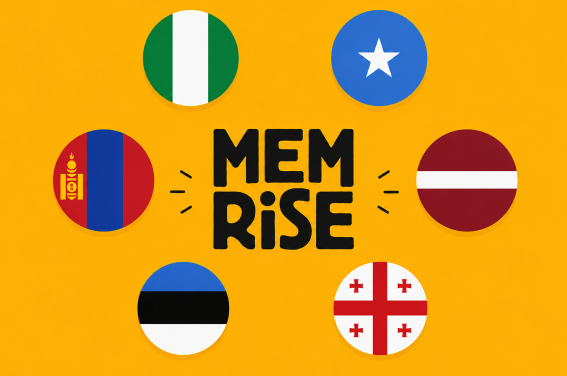
TL;DR: Duolingo doesn’t feature every language. If it doesn’t offer the language you want to learn,
Memrise offers official courses in several languages that Duolingo doesn’t currently teach, including
Lithuanian, Hausa, Estonian, Somali, Mongolian, Latvian, Georgian, and Yoruba. It also offers a
different approach to learning new languages by combining vocabulary review with videos of native
speakers, which improves learners’ comprehension.
Memrise includes a broad selection of languages, with handy tools to help you learn them. You can
find several languages that are not available in popular language-learning apps such as Duolingo.
These language courses are consistently being updated, so you should review offerings periodically.
Which languages can't you currently learn on Duolingo?
Duolingo does not cover Lithuanian, Hausa, Estonian, Somali, Mongolian, Latvian, Georgian, and
Yoruba. However, Memrise’s catalogue includes several official courses that are currently unavailable on Duolingo, making it a useful companion. Learners whose interests extend beyond the most commonly taught languages can benefit from Memrise.
Currently, the following languages are available on Memrise but do not have official Duolingo courses:
| Language |
Memrise | Duolingo | Common reasons for learning |
| Yoruba | ✓ | x | Business in West Africa, and trave |
| Hausa | ✓ | x | Communication across West Africa |
| Somali | ✓ | x | Community, travel, and cultural heritage |
| Mongolian | ✓ | x | Travel, history, and academic study |
| Latvian | ✓ | x | Living or working in Latvia |
| Lithuanian | ✓ | x | Heritage learning and travel |
| Estonian | ✓ | x | Relocation and business |
| Georgian | ✓ | x | Travel and cultural interest |
For many learners, these languages are not niche interests. They are learning these languages because they are spoken by their relatives, neighbours, colleagues, and local communities. Finding a platform that supports these goals can be the difference between starting a language and never starting at all.
Memrise covers numerous languages, including those that are often overlooked. All the language
courses have structured lessons and reviews to help learners quickly master the language. The
courses are also regularly updated, which is why it’s important to continuously refer to the official
catalogue for the latest information.
Why don't all language-learning apps teach similar languages?
Ethnologue’s 29th edition, published in February 2026, lists 7,170 living languages worldwide, so
every language-learning platform has to decide which of them to invest its time and resources in.
Developing a new language requires linguistic expertise, educational design, and ongoing
maintenance. Most providers end up prioritising languages that appeal to their consumers and have the greatest global demand.
There are common languages that attract millions of learners worldwide. These include French,
German, Spanish and Japanese. Language-learning apps tend to specialise in these languages first because they receive commercial attention. Languages that have a smaller population interested in them receive less attention, even if they are spoken by millions of people.
However, people have different reasons for learning a new language. Less popular languages, like
Somali or Yoruba, may be practical for someone reconnecting with their heritage, relocating to a new country, or preparing for humanitarian work. The best language to learn will come down to an individual’s preference and goal.
Language-learning apps are, therefore, constantly trying to update their offerings. This is because
learners benefit from a broader catalogue of languages. Rather than assuming everyone wants to
learn the same languages, these apps choose to constantly add new courses that cater to a wider variety of personal, cultural, and professional motivations.
Is learning an uncommon language harder?
Not necessarily. The difficulty of study depends on several factors, including previous experience,
study habits, and native language. What can make learning harder is a lack of good learning
resources.
Lesser-taught languages tend to have fewer textbooks, fewer classroom courses, and fewer digital learning tools. Learners end up spending more time searching for materials than studying. Having a structured course helps give them a strong starting point to improve their comprehension of the language.
Long-term success when learning an uncommon language also depends on hearing the language used naturally. Whether learning Mongolian, Hausa or Estonian, learners need to recognise words spoken by native speakers. Listening to the language being used at a conversational speed boosts comprehension.
Listening is an important part of learning a new language because real communication involves
different accents. Learners must understand how to put different words together and connect speech. Listening also helps them find a natural pacing, making them better communicators.
Why can I recognise words but still struggle to understand conversations?
Reading and listening are different skills. Learners can know hundreds of individual words but still
struggle to follow conversations. This is one of the most common frustrations language learners
experience.
Learners can watch a video or listen to someone speak and suddenly feel as though they have
forgotten everything they’ve learnt about that language. This is a common occurrence that isn’t about vocabulary but about recognition. You must practise listening skills to improve your comprehension.
When reading, you have time to process each word individually. However, you don’t have this amount of time during conversations. Your brain only gets a fraction of a second to recognise sounds, separate words, and understand meaning before the speaker moves on.
Researchers have long distinguished between knowing a word when you see it (recognition
knowledge) and understanding a language in real time (receptive fluency). A 2020 study by Kriss
Lange and Joshua Matthews in Studies in Second Language Learning and Teaching tested 130
Japanese learners of English and found that recognising spoken words and being able to split
continuous speech into separate words together accounted for 34% of the variation in their TOEIC
listening scores. Repeated exposure to authentic speech is what builds that second skill; isolated
vocabulary alone will make it difficult to understand conversations quickly.
Instead of relying solely on carefully scripted recordings or audio, Memrise incorporates videos of
native speakers using everyday language. Learners get exposure to different speaking speeds, styles, and accents from the beginning of their course. This bridges the gap between recognising vocabulary and understanding real conversations.
Why isn't memorising vocabulary enough?
Remembering a word is different from being able to use it. You may memorise a word today and
understand its meaning, only to forget it a week later. This happens to most learners, especially when learning new words every day.
Memory researchers have consistently found that information is retained more effectively when it is reviewed over intervals rather than repeated continuously in a single session. Hermann Ebbinghaus first mapped this pattern in Über das Gedächtnis (1885), published in English in 1913 as Memory: A Contribution to Experimental Psychology and archived by York University’s Classics in the History of Psychology. It has held up since: a 2006 review in Psychological Bulletin by Nicholas Cepeda and colleagues pooled 839 assessments from 317 experiments and found that spacing study sessions apart produced better recall than massing them together.
However, timing when you review learnt words is only the first part of the process. Words are easier to remember when they appear in meaningful contexts. Hearing different people use a word in separate conversations contributes to stronger long-term memory. This also helps you learn the different ways people pronounce the word depending on context.
Vocabulary learning is easier when several skills reinforce one another. Learners should follow these steps:
● Learn new words
● Review them at appropriate intervals
● Hear them spoken naturally
● Encounter them in various contexts
● Use them through speaking and writing
These elements complement one another. Vocabulary starts the learners off in the right direction.
Authentic listening transforms those words into usable language.
How do native-speaker videos help with language comprehension?
Exposure to authentic speech helps learners recognise a language more quickly. Textbook dialogues and studio recordings are useful when learning basic vocabulary and sentence patterns. However, they are slow and designed to highlight specific grammar points. Real conversations rarely sound like that and are often fast-paced.
Native speakers pause, shorten words, and use expressions that aren’t always available in beginner lessons. Even confident learners find this jump surprising. They hear words used differently and with different accents.
You can better prepare for these differences by hearing a range of voices early. Instead of associating a word with a single recording, you learn to recognise how it sounds when spoken by different people. The situations surrounding the word usage are also different, increasing your understanding of the language.
Memrise uses videos of native speakers throughout the learning courses. Learners are exposed to
natural pronunciation early. You listen to varying speaking styles and everyday expressions. This
makes it easier to recognise spoken language instead of memorising vocabulary alone.
Listening practice is valuable when studying a language that is less widely taught, especially if you don’t have access to local conversation groups or classroom instruction. Hearing authentic speech builds your confidence before you engage in real-world interactions...
What app should I choose?
There isn’t a single language-learning app that is best for everyone. The right choice depends on your preference and what you want to achieve. Some of the popular options include Duolingo and
Memrise.
Duolingo has a structured, gamified experience that appeals to some learners. The short lessons
complement their progressive system, slowly introducing learners to a new language. It includes some of the most commonly spoken languages and has a user-friendly app.
If you are looking for a language-learning app that includes a wider variety of courses, Memrise is a suitable alternative. It introduces learners to authentic spoken language from the beginning. You will benefit from this app if you are looking for learning materials that include real speakers and feature vocabulary practice.
Here are the key differences between the two:
| Consideration |
Duolingo | Memrise |
| Focus | Structured lessons paired with daily practice | Vocabulary, listening, and conversational recognition |
| Language catalogue | Curated selection of major languages | Broader catalogue, including less commonly taught languages |
| Native-speaker video | Limited | Integrated into many official courses |
| Learners looking for heritage languages | May not find the language | Supports a wider variety of languages |
| Best suited for | Building a daily study habit | Expanding language choice and improving listening comprehension |
Many users combine several resources when learning a new language. They get the best of every
resource as their needs change. Start by choosing a platform that aligns with your learning objective because all apps offer different experiences and outcomes.
Is learning a less commonly taught language worth it?
Yes, it is worth learning a less commonly taught language. Global popularity is not the only measure of a language’s value. Languages can help you:
● Speak with relatives
● Prepare for work overseas
● Connect with your local community
● Explore literature and history
● Conduct academic research
● Travel more confidently
What matters is your motivation to learn a language. The number of people studying it is not an
important factor. Languages such as Somali and Yoruba are spoken by millions of people across
Africa. Lithuanian, Latvian, and Georgian carry rich literary and cultural traditions.
While the biggest barrier has always been finding quality learning resources, some apps now cover these languages extensively. These digital platforms make structured lessons available to a wide audience.
You can start learning as soon as you’ve selected a suitable course. All you need is consistent
practice, repeated exposure, and regular listening. This creates a foundation for long-term progress, regardless of the language you choose
Frequently asked questions
What languages does Memrise have that Duolingo doesn't?
Memrise currently runs official courses in eight languages that Duolingo does not teach. Both
catalogues change over time, so check each platform’s official course list before you commit:
● Hausa
● Somali
● Mongolian
● Latvian
● Estonian
● Yoruba
● Georgian
● Lithuanian
Between them, these languages cover West Africa, the Horn of Africa, the Baltic states, Central Asia, and the Caucasus.
Why doesn't Duolingo offer all languages?
There are thousands of languages across the world, and creating courses requires substantial
educational and linguistic resources. Most platforms start with languages with the greatest global
demand before offering less popular ones. Some heritage or regional languages may receive less
attention despite being widely used.
Is Memrise better than Duolingo?
Neither platform is objectively better for every learner. Memrise focuses on vocabulary acquisition and authentic listening, while Duolingo prioritises structured daily lessons and habit building. The better choice comes down to an individual’s preference, learning goals, and the language they want to study.
Why do I remember words but not conversations?
Understanding spoken language in real time is a different skill from recognising vocabulary on a page. When you read, you can take as long as you need over each word. In conversation, your brain has a fraction of a second to separate the sounds into words, and speakers run those words together, drop syllables, and vary their accents. Regular exposure to authentic listening is what closes the gap and lets you follow conversations better.
Do native-speaker videos really help?
Yes. Hearing the same word from several different speakers stops you tying it to one recording, which is what makes it recognisable when someone else says it at speed. Native-speaker video also carries what scripted audio strips out: everyday phrasing, regional accents, and the pauses and shortened words that fill ordinary speech. Memrise builds these clips into its official courses, so you meet familiar words as they appear in real conversations.
What is the best way to remember vocabulary long-term?
Review vocabulary over spaced intervals rather than repeating everything in one session. A 2006
review in Psychological Bulletin by Nicholas Cepeda and colleagues pooled 839 assessments from
317 experiments and found that spaced study consistently beat massed study on later recall. Spacing
alone is not enough, though: words stick better when you also hear them spoken naturally, meet them
in more than one context, and use them in speech and writing, all of which help you memorise words
faster.
Should I use more than on language-learning resource?
Many learners do, and it is usually a sensible approach. Apps introduce vocabulary and grammar in a
structured order, while films, books, podcasts, and conversation partners build the comprehension
and fluency that structured lessons alone cannot. Pick one app as your main course so your progress
stays organised, then add the other resources around it as your listening improves, and you will have
a more balanced learning routine.