Learn Australian Languages
with Memrise

Learn Australian Languages on Memrise!
Learn vocabulary with word lists made by users.

Learn Australian Languages on Memrise!
Learn vocabulary with word lists made by users.
All levels
80 Million LEARNERS
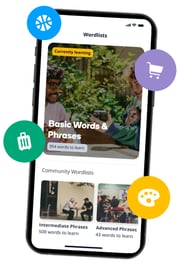
Personalised Australian Languages lessonsMemrise teaches you Australian Languages vocabulary, with word lists created by other users. |
|
Search the community for lists made by learners with your exact goals.
DELE prep? GCSE year? Job interview Spanish? Japanese phrases in your fave Netflix series?
Someone’s made it. And if not , you can spin up your own list in seconds.
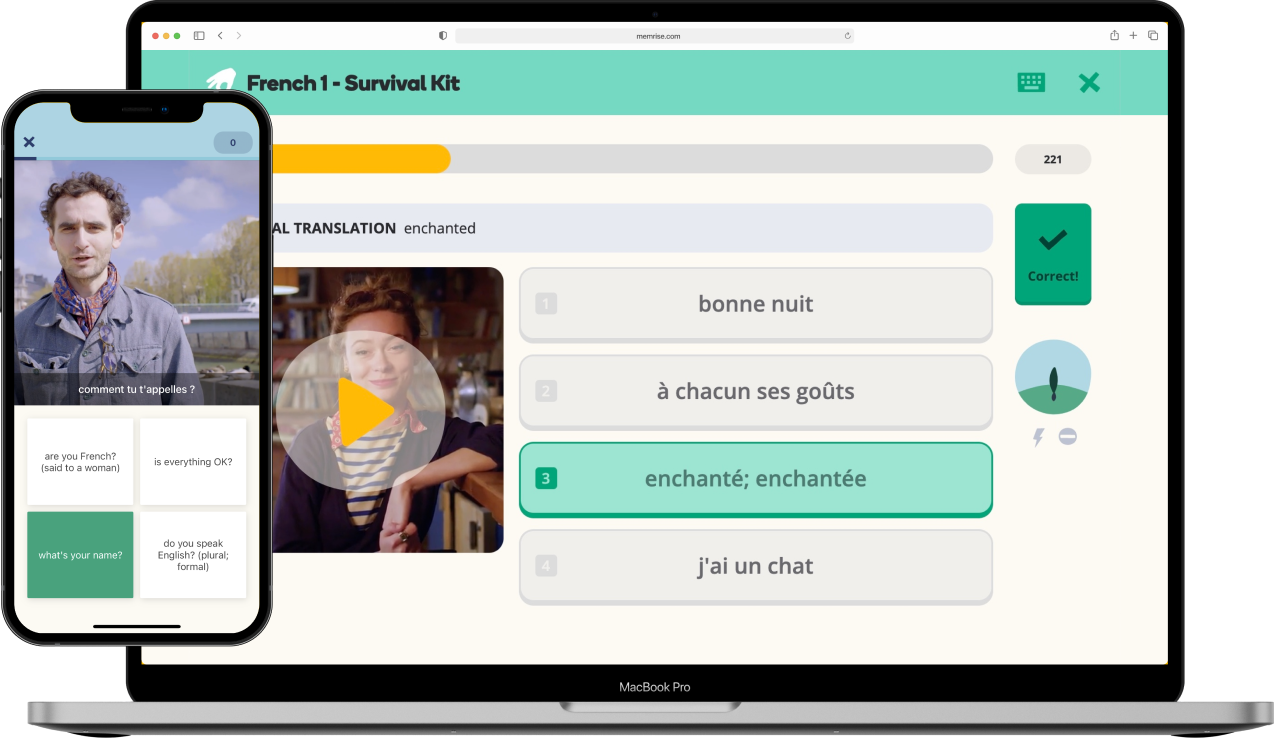
Every list - whether you found it or built it - plugs straight into the Memrise learning engine.
Quick sessions, smart repetition, native speaker videos, and examples that actually stick.
Your vocab. Your goals. Zero extra effort.
Got a study buddy? A teacher? A friend who keeps asking “what app should I use?”
Share your lists with them, and anything you create becomes part of the community - helping the next learner who has the same goal as you.

The videos and tiktok esk side makes it fun to hear my target language and I love how they (for Japanese) focus on kanji and the answer has the furigana.
vianewsonI don’t ever leave reviews. Memrise provides natural speaking habits of your target language and works on listening skills in a way that no other app I’ve found does. I recently started Japanese and I can say that Memrise is great at all languages!
Starlighter99Memrise is very fun whenever I’m in the mood to learn some Japanese but not only does it make learning a language fun and easy it is also very effective. I have found in one day I have learned many words with this app. 5 out of 5
BBL1kesDeezNutz100% The best app I have used to start learning Japanese very helpful and very fun!!!
drywallsheetI found this very addictive even without getting the full subscription, I totally recommend for Learning hiragana Japanese as it is very easy.
aacneeeeVery good for learning Japanese
mincraft panha

Why is learning Australian Languages with Memrise better than DuoLingo?
Memrise teaches you Australian Languages words and phrases that you’re actually going to use in the real world. Learn vocabulary with word lists created by other users.
How much time will I need to commit to learning Australian Languages?
As much or as little as you like.
We recommend doing a small amount consistently, learning a few words a day goes a long way.
It’s a lot of fun showing off your learning streak to your friends!
Will the Australian Languages lessons be tailored to my language level?
Yes. Each word list contains words and phrases of varying difficulty. You can select which word list to learn based on your skill level and preview each word list before you start learning it.
Can you learn Australian Languages through an app?
Absolutely.
Memrise brings you the full immersive experience for Australian Languages filtered to your level and interests. It’s the best place to get all the quality language practice you need without catching a flight.
Does Memrise offer certificates for learning Australian Languages?
We do not offer certificates for learning Australian Languages with us.
You can however build up your learning streak by completing daily activities and receive points whilst doing so!
Is Memrise a credible app to learn Australian Languages?
Founded in 2010, we now have over 80 million learners successfully learning a language with Memrise.
Our methods are based heavily on research to ensure you acquire a language in the most effective way possible and our content is created by expert linguists.
Read more on our ‘about us’ page.
Are Australian Languages difficult to learn for English speakers?
Australian Aboriginal languages are considered among the most challenging languages for English speakers — most sit in the Category III to IV range, with an estimated 1,100 hours or more to reach professional proficiency depending on the language. There are around 250 distinct Aboriginal languages across Australia, varying enormously in grammar and vocabulary, so the experience differs significantly by language. Common features across many include complex noun class systems, rich case systems with up to 10 or more cases, and verb structures that encode spatial and directional information in ways that have no parallel in English. Languages like Warlpiri and Arrernte have extraordinarily free word order — grammatical relationships are carried by suffixes rather than position — which requires a fundamental rethinking of how sentences work. Vocabulary shares no roots with English, and many languages include sounds unfamiliar to English ears. Most Australian Aboriginal languages use a Latin-based orthography, which removes the script hurdle, and active revitalisation efforts across communities have improved the availability of learning resources in recent years. Memrise structures Australian Aboriginal language learning around high-frequency vocabulary and everyday phrases, helping learners build a practical foundation in some of the world's oldest living languages progressively rather than being overwhelmed from the start.
How long does it take to learn Australian Languages?
Australian Aboriginal languages have no official US Foreign Service Institute ratings, but most are broadly estimated to require 1,100 hours or more to reach professional proficiency — placing them firmly in the Category III to IV range, with some of the more complex languages like Warlpiri potentially requiring significantly longer. The 250-plus distinct languages vary considerably in difficulty, so the timeline depends heavily on which language is being learned and the availability of resources for that specific language. Complex case systems, free word order, and verb structures encoding spatial and directional information mean the grammar remains challenging well beyond the beginner stage, and vocabulary offers no shortcuts from English throughout. That said, most languages use a Latin-based orthography, removing the script hurdle, and active revitalisation efforts across communities have improved resource availability in recent years. Memrise focuses lessons on high-frequency vocabulary and everyday phrases, helping learners build a practical foundation in some of the world's oldest living languages steadily and progressively.
One account
|
 |