
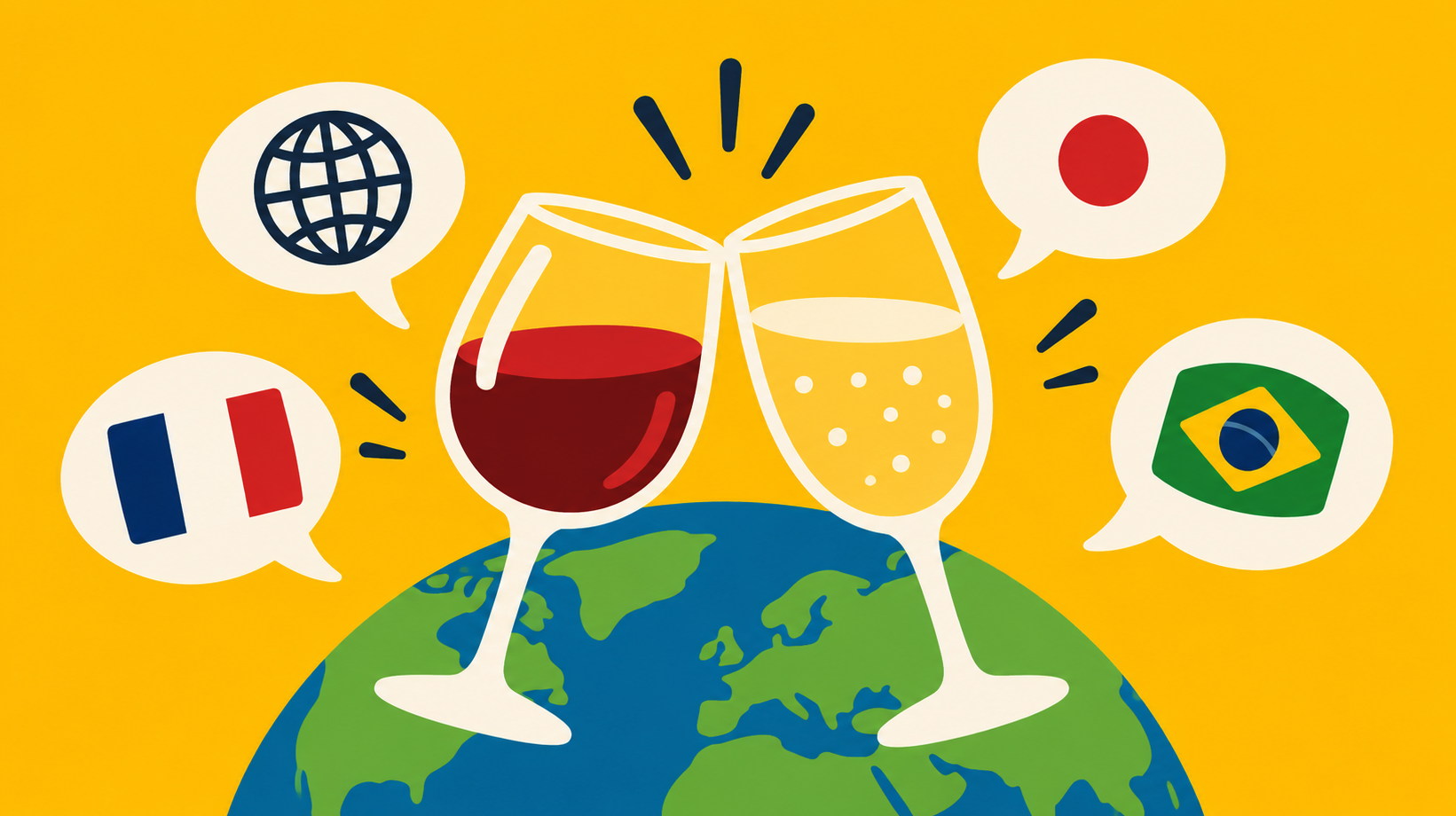
TL;DR: The word “cheers” expresses good health, happiness, or shared celebration around the world. In Spanish, say “¡Salud!”; in French, “Santé!”; in Italian, “Salute!”; and in German, “Prost!”. Other useful toasts include “干杯 (gān bēi)” in Mandarin Chinese, “乾杯 (kanpai)” in Japanese, and “Sláinte!” in Irish. Toasting is one of the most universal social traditions, which makes it one of the first phrases worth learning in a new language.
Learning how to say “cheers” in other languages helps you take part in social occasions. It is also a useful vocabulary that provides insight into how different languages express goodwill.
How do you say "cheers" in 20 languages?
Cheers is used when making a toast. It is a short expression said before or during a shared drink to mark an occasion, wish others well or celebrate an achievement. Many languages don't have a direct translation for “cheers” and use phrases connected with health, life, or good fortune. Here is a look at 20 ways to say “cheers” in different languages when raising a glass:
| Language | Toast | Approximate pronunciation or meaning |
|
Spanish |
¡Salud! |
sah-LOOD (health) |
|
French |
Santé! |
sahn-TAY (health) |
|
Italian |
Salute! |
sah-LOO-teh (health) |
|
Portuguese |
Saúde! |
sah-OO-deh (health) |
|
German |
Prost! |
prohst |
|
Dutch |
Proost! |
prohst |
|
Afrikaans |
Gesondheid! |
guh-SONT-hayt (health) |
|
Danish |
Skål! |
skohl |
|
Swedish |
Skål! |
skohl |
|
Norwegian |
Skål! |
skohl |
|
Finnish |
Kippis! |
KIP-pis |
|
Polish |
Na zdrowie! |
nah ZDROH-vyeh (health) |
|
Czech |
Na zdraví! |
nah ZDRAH-vee (health) |
|
Greek |
Στην υγειά μας! (Stin ygeia mas!) |
steen ee-YAH mahs (to our health) |
|
Mandarin Chinese |
干杯 (Gān bēi) |
gahn bay (dry the cup) |
|
Japanese |
乾杯 (Kanpai) |
kahn-pie |
|
Korean |
건배 (Geonbae) |
guhn-bae |
|
Irish |
Sláinte! |
SLAWN-chuh (health) |
|
Hebrew |
לחיים (L’chaim) |
luh-KHAHY-im (to life) |
|
Russian |
За здоровье! (Za zdorovye!) |
zah zdah-ROH-vyeh (to health) |
The pronunciation guides above are approximate. Some expressions also have regional variants, and literal translation does not always capture the full cultural meaning.
Why do so many toasts refer to health?
Several familiar toasts express a wish for good health. Some of the languages that use words associated with health for “cheers” include Spanish (salud), French (santé), Czech (zdraví), Polish (zdrowie), Italian (salute), and Portuguese (saúde).
These phrases translate to health because they connect a simple social ritual with a positive wish for the people sharing the occasion. While you don’t need to know every word’s history to use the expression, language learning apps like Memrise make them easier to remember by giving them meaning.
Other languages around the world focus on different ideas for “cheers” than health. Hebrew “l’chaim” means “to life”, while Mandarin Chinese “gān bēi” translates to “dry the cup”. These differences show why translating “cheers” word for word is not always possible. Start by learning the expression that speakers conventionally use when making a toast.
What is the difference between formal and informal toasts?
The appropriate expression depends on the language, the occasion, and the people involved. A wedding or business dinner may involve a longer speech before everyone raises their glasses, while a toast among friends is usually brief and spontaneous.
In French, “santé” is a commonly used short toast, while “à votre santé” (to your health) is a longer expression that is used in formal occasions. In Italian, “salute” is widely used, while “cin cin” is an alternative expression in informal settings.
When learning a toast, listen to native speakers to know how to use it correctly. Memrise includes native-speaker videos to help you learn what sounds natural, based on different regional customs and social expectations. You can also wait and follow the host’s lead if you are unsure of what to say. This makes it easier to participate respectfully.
How do toasting customs differ around the world?
The words are often just a single part of the toast. Other elements, such as the timing, gestures, and setting, can also shape the experience. Some occasions include a speech or a specific order for people to offer their wishes, while others call for a short expression before taking a sip. Here are a few examples that illustrate the range of expressions:
- In Nordic languages: Norwegian, Swedish, and Danish all use “skål” to signify friendship and goodwill. Its origins trace back to the Old Norse word “skál”, meaning a drinking vessel or bowl.
- In East Asia: Japanese speakers say “Kanpai”, while Mandarin Chinese speakers say “gān bēi”. Both words are common expressions for making a toast, although the words and customs are distinct.
- In Ireland: people use the word “Sláinte” as a traditional toast associated with good health. It is also a useful Irish expression to recognise in social settings.
- In Hebrew-speaking contexts: these speakers use “L’chaim”, which translates to “to life”. It is used to express a positive wish for the occasion.
These examples are not rules for every gathering. You should understand that customs differ between families, communities, and events. Therefore, a phrase should be understood as one part of a broader social interaction.
Frequently asked questions
What is the most widely understood way to say "cheers"?
There is no single toast that is used all over the world. English “cheers” is familiar in many international settings, but local expressions like “salud”, “Kanpai”, and “prost” are useful when speaking with people in their own language. It is easier to participate in a shared occasion when you’ve learned the local phrase.
Does "cheers" always refer to drinking?
No. In British English, the word “cheers” also means “thank you” and can serve as an informal goodbye. However, the intended meaning depends on the situation and how the word is used. You should know the context of the conversation to determine what the speaker is communicating.